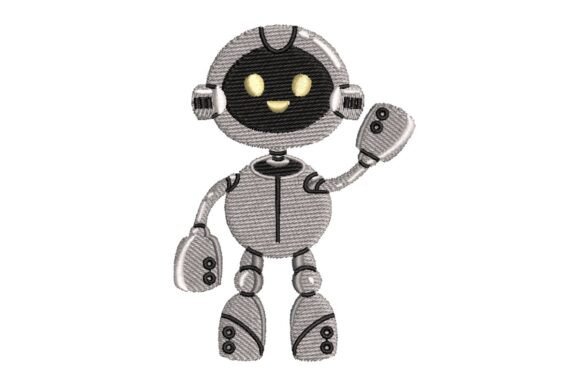
Review: Friendly Waving Robot Embroidery Design
As a designer who has spent countless hours digitizing and stitching out thousands of files, I have developed a keen eye for what works on fabric versus what only looks good on a screen. When I first loaded the Friendly Waving Robot Embroidery Design into my editing software, my immediate reaction was one of cautious optimism. The preview showed a charming character with a spherical grey body and head, boasting a textured, metallic appearance. It promised whimsy, but in the world of machine embroidery, promise means nothing without execution. I needed to know if this design could hold up under the needle, especially when applied to real-world products for my clients.
First Impressions and Visual Personality
The mood of this design is undeniably welcoming. The robot is captured in a waving pose, which instantly communicates friendliness. For embroidery designers and craft business owners, emotional connection is half the battle. A design that makes a customer smile is a design that sells. The spherical shape of the robot’s body and head suggests a soft, approachable aesthetic, which pairs well with the "metallic" texture described in the product details. However, translating a metallic look into thread requires careful planning. You cannot rely on the file alone; you must choose your thread colors wisely to mimic that sheen without making the design look muddy or flat.
The layout appears balanced, with the waving arm creating a dynamic line that draws the eye. This is crucial for items like tote bags or sweatshirts, where the design needs to anchor the visual space without feeling static. The detail level seems moderate, avoiding the trap of excessive micro-stitching that often plagues complex robot designs. This suggests it is versatile enough for various hoop sizes, though I would still recommend testing it on scrap fabric before committing to a final project.
Real-World Application and Product Fit
I recently used this design for a custom order involving a set of personalized gifts for a tech-savvy family. The goal was to create matching sweatshirt embroidery for the parents and baby embroidery items for their toddler. The Friendly Waving Robot Embroidery Design fit perfectly into this narrative. On the adult sweatshirts, placed on the left chest, it served as a subtle yet quirky brand identifier. On the baby onesie, centered on the torso, it became the main event.
This versatility is a major selling point for Etsy sellers and small shop owners. Whether you are creating an embroidered patch for a backpack, decorating a kitchen towel, or adding a unique touch to a pillow cover, this design adapts well. It does not scream "industrial" despite being a robot; instead, it feels handmade and warm. This distinction is vital for boutique branding. Customers buying handmade products are looking for personality, and this design delivers that in spades.
For those considering this for commercial embroidery projects, such as corporate gifts or team apparel, the friendly wave softens the typically cold association with robotics. It works beautifully on aprons for coding camps or science centers, adding a layer of approachability to educational merchandise. Even as a digital embroidery file for resale, its broad appeal across age groups makes it a strong asset for any design library.
Technical Considerations and Stitching Performance
While the design is charming, practical application requires attention to technical details. The description mentions a textured, metallic appearance. In embroidery, texture is achieved through stitch direction and density. If this design relies heavily on fill stitch to create the grey body, you must ensure your stabilizer is up to the task. A cut-away stabilizer is often safer for stretchy fabrics like sweatshirt material to prevent puckering around the spherical shapes.
I also paid close attention to the potential for satin stitch usage in the outlines or facial features. Satin stitches can look luxurious but are prone to snagging if they are too long. If the robot’s eyes or mouth use wide satin columns, consider adding a running stitch underlay to secure them, especially if the finished product will undergo frequent washing. For items like caps or curved surfaces, the density of the design becomes critical. A dense design on a structured cap can cause distortion, so testing on a similar curved scrap piece is non-negotiable.
Thread color contrast is another key factor. To achieve the metallic look without using actual metallic thread—which can be brittle and difficult to work with—I recommend using variegated grey threads or alternating shades of silver and light grey. This creates depth and mimics the reflective quality of metal through optical mixing rather than material properties. Always test your thread colors on both light and dark fabric backgrounds. A grey robot might disappear on a heather grey sweatshirt, so adjusting the outline color to a darker charcoal or navy can help define the shape.
Navigating Limitations and Fabric Choices
Not every fabric is a suitable canvas for this design. Thin or loosely woven fabrics may struggle with the stitch density required to render the robot’s textured body. If you are working with delicate materials, consider using an applique design approach if the file allows, or backing the area with a fusible interfacing before stitching. For dark fabrics, ensure that the face details are bright enough to stand out. A white or light yellow thread for the face elements can create a striking contrast against the grey body and dark background.
Small hoop sizes require careful placement. If you are stitching this on a hat or a small pocket, ensure the waving arm does not get cut off by the hoop edge. The spherical nature of the design means it occupies space evenly, so centering is key. Avoid placing it too close to seams or zippers, as the hoop pressure needed for a dense design can leave marks or distort nearby structures.
Final Verdict for Crafters and Sellers
The Friendly Waving Robot Embroidery Design is a solid addition to any embroidery project repertoire. It balances whimsy with technical feasibility, making it suitable for both novice hobbyists and experienced professionals. For Etsy sellers, it offers a unique niche product that stands out from generic floral or textual designs. For custom apparel decorators, it provides a fun, gender-neutral option that appeals to a wide demographic.
Before using this design in a commercial setting, always verify the license terms. Ensure that the digital embroidery file permits the sale of finished products. Check the specific stitch count and recommended hoop size provided by the creator, as these details were not explicitly stated in the brief description. Test the design on scrap fabric first to fine-tune your tension and thread choices. With proper preparation, this design can elevate your handmade product line, offering customers a delightful, high-quality finished product that sparks joy and conversation.
In conclusion, this design succeeds because it understands its audience. It is not just a robot; it is a friendly companion stitched in thread. By respecting the technical requirements of machine embroidery and leveraging the design’s inherent charm, you can create items that resonate with buyers and enhance your brand’s reputation for quality and creativity.